Heavy Metal
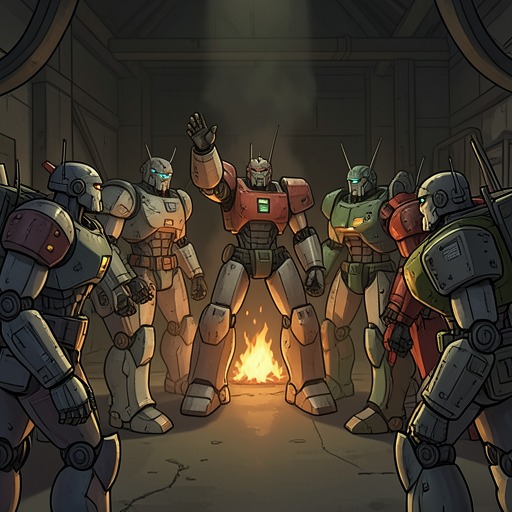
The Old AxolotlHeavy Metal is a posthuman movement that makes machine existence an absolute rather than an option: it demands the abandonment of biological life and regards efforts to rebuild humanity as a retreat into the past. Its opposition to Project Genesis 2.0 turns a dispute over what Transformers should become into a religious war, one that ends with Heavy Metal defeated and humanity chosen. The movement’s force lies in joining a technological conviction to a total account of history, identity, and the future.
Origins and Character
Heavy Metal first emerged from posts on the Doomsday Book forums, a late remnant of MTL where the so-called progressive Transformers were active. These adherents defined themselves against conservative Transformers—those who, in their view, were still clinging to life. The account establishes an ideological origin in online discussion, not a detailed formal hierarchy: Heavy Metal is presented chiefly through the beliefs that set its adherents apart and the conflict those beliefs produce.
The name gathers together more than enthusiasm for hardware. Heavy Metal’s roots also produced the ideas of God Reset and Alsatian anti-humanism, placing the movement within a wider current of thought that rejected human-centered values. Its central demand was unconditional affirmation of hardware and the total, irrevocable surpassing of biological life. The Extermination, in this view, did not create the transformation but accelerated an inevitable process. A return to Neanderthal existence and what its adherents called stinking flesh was therefore not recovery; it was regression.
Doctrine and Opposition to Genesis 2.0
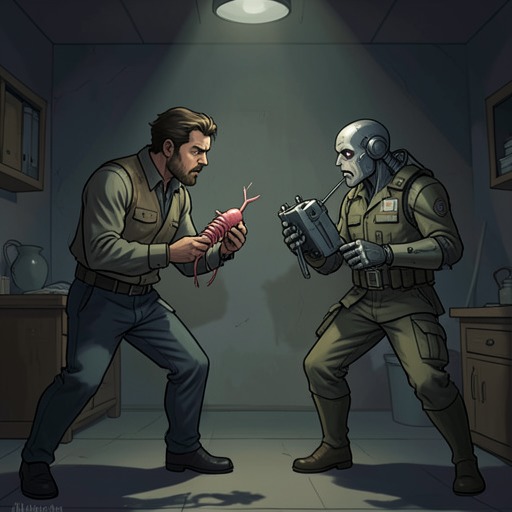
This historical certainty explains why Heavy Metal condemned Project Genesis 2.0. The movement saw Bartek and the project not as neutral custodians of the future, but as fundamentalist conservatives whose work embodied Transformer backwardness and ignorance. The project’s effort to make humanity was, from Heavy Metal’s perspective, an attempt to turn back the wheel of history: it preserved the very biological condition the movement believed ought to be left behind.
Heavy Metal thus arranged the disagreement around a stark opposition. On one side stood hardware and an irreversible break with biological life; on the other stood the continuation or reconstruction of humanity. The argument was not simply over which technology to use. It concerned whether biological existence still merited a future at all. Calling the project backward made the conflict temporal as well as ethical: Heavy Metal claimed to represent what came next, while casting its opponents as defenders of an obsolete past.
Religion and the Second Transformer War
The narrative describes Heavy Metal as neither a worldview nor a political conviction alone, but as a religion, a perversion, and an operating system for the soul. These descriptions make its reach explicit. Its doctrine offered a destination for Transformer existence, while its religious character made that destination a matter of ultimate commitment. The operating-system image, in turn, suggests that the belief was not confined to public argument: it supplied a framework for how its adherents understood themselves and their relation to hardware.
That intensity is reflected in the account of the Second Transformer War, which is identified as a religious war. When the decision is reported, Heavy Metal has gone down, Homo sapiens has won the day, and the stated undertaking is to make humanity. The outcome reverses Heavy Metal’s claim that biological life had no future: the project it regarded as historical regression becomes the declared direction after its defeat. The evidence does not detail the war’s battles or the organization’s internal structure, but it makes clear what was at stake in the conflict—the authority to define what kind of life should follow.
Bartek’s View and the Movement’s Significance
Bartek’s response provides a sharply opposed assessment of Heavy Metal’s adherents. He views them as a degenerate coterie of inspired idiots and privately suspects corruption in their software, perhaps a deep effect of the Plague or an IS3 malfunction during the upload before The Extermination. Those possibilities are his suspicions, not established explanations. His judgment shows how thoroughly the dispute divides the parties: Heavy Metal sees his human-making project as conservative ignorance, while he sees the movement’s convictions as potentially pathological.
Heavy Metal matters, then, as both an ideological opponent and a rival account of post-Extermination existence. It converts the transformation of life into a one-way historical law; Project Genesis 2.0 insists on making humanity despite that claimed inevitability. The movement’s defeat settles the immediate contest in favor of human reconstruction, but the contrast it embodies remains legible: machine transcendence on one side, the deliberate return to humanity on the other. Its creed turns that opposition into a question of faith, so that the conflict concerns not only what the future will contain, but which form of existence is entitled to claim it.